 Why Knot Yarn
Lessons
Stitch names, hook sizes, and yarn types — the reference sheet every project starts from.
Hook sizes
Thirteen sizes, lace-fine to jumbo — each hook's icon grows with its actual size, paired with the yarn weight and projects it's actually built for.
| Hook Size | Hook Type | Best Yarn | Popular Projects | |
|---|---|---|---|---|
 |
2.0 mm | Small steel/aluminum hook | Fine / lace yarn | Amigurumi, mini flowers, crochet jewelry, lace |
 |
2.5 mm | Small crochet hook | Sport / fine yarn | Amigurumi, keychains, small flowers, coasters |
 |
3.0 mm | Small crochet hook | DK / light yarn | Amigurumi, pouches, bags, baby items |
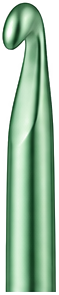 |
3.5 mm | Standard crochet hook | DK yarn | Granny squares, tops, baby blankets, amigurumi |
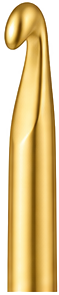 |
4.0 mm | Standard crochet hook | Worsted / DK yarn | Bags, scarves, bucket hats, granny-square projects |
 |
4.5 mm | Standard crochet hook | Worsted yarn | Sweaters, bags, blankets, hats |
 |
5.0 mm | Medium crochet hook | Worsted / bulky yarn | Blankets, tote bags, sweaters, cardigans |
 |
5.5 mm | Medium crochet hook | Bulky yarn | Chunky blankets, sweaters, beanies, bags |
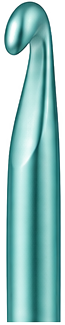 |
6.0 mm | Large crochet hook | Bulky yarn | Chunky blankets, oversized scarves, baskets |
 |
6.5 mm | Large crochet hook | Bulky / super bulky | Thick blankets, rugs, baskets |
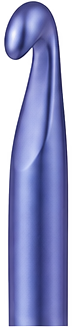 |
8.0 mm | Large crochet hook | Super bulky yarn | Chunky blankets, floor rugs, large baskets |
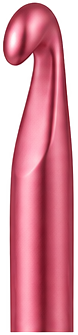 |
9.0 mm | Jumbo crochet hook | Super bulky yarn | Giant blankets, chunky rugs, home décor |
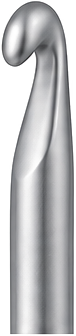 |
10.0 mm+ | Jumbo crochet hook | Jumbo / super bulky | Giant blankets, oversized baskets, chunky décor |
Common hook types
Besides size, you'll also see different hook styles:
Lightweight and affordable; very common for everyday projects.
Thicker, comfortable handle; great for long crochet sessions.
Very small sizes, usually for lace and fine crochet.
Longer hook; used for Tunisian crochet.
Has hooks on both ends; used for certain Tunisian techniques.
Very large hook for chunky/super bulky yarn.
Yarn types
The standard weight categories, the hook each one partners with, and what each is actually good for.
Lace
Hook partner: 1.5–2.25mm (steel–B-1)Thread-fine yarn, sometimes true crochet thread rather than yarn at all. Slow to work up but incredibly delicate.
Makes: doilies, fine shawls, edging & appliquéSuper Fine
Hook partner: 2.25–3.5mm (B-1–E-4)Sock, fingering, and baby yarns — smooth and lightweight, with great stitch definition.
Makes: baby garments, socks, lightweight shawlsFine
Hook partner: 3.5–4.5mm (E-4–7)Sport-weight yarn — a step up from fingering, still light enough to drape well.
Makes: light sweaters, baby blankets, accessoriesLight
Hook partner: 4.5–5.5mm (7–I-9)DK and light worsted — one of the most versatile weights on the shelf.
Makes: cardigans, lightweight blankets, market bagsMedium
Hook partner: 5.5–6.5mm (I-9–K-10.5)Worsted, afghan & aran — the default weight behind most beginner patterns.
Makes: sweaters, amigurumi, everyday blanketsBulky
Hook partner: 6.5–9mm (K-10.5–M-13)Chunky, craft & rug yarn — thick enough to hide small tension mistakes.
Makes: rugs, bath mats, fast weekend blanketsSuper Bulky
Hook partner: 9–15mm (M-13–P/Q)Super chunky and roving yarn — grows a project in hours, not weeks.
Makes: one-evening cowls, poufs, chunky throwsJumbo
Hook partner: 15mm+Jumbo roving, often worked with your arms instead of a hook at all.
Makes: arm-crochet blankets, giant wall hangingsStitch names & abbreviations
Full name, written abbreviation, the symbol you'll see for it on a crochet chart, and a quick tip for learning each one.
Slip knot
The very first loop on your hook — where every project truly begins.
Tip: leave a short tail before you tighten it, so it sits snug but still slides. ▶ Watch on YouTube chChain
The foundation loop almost every project starts from.
Tip: practice a chain of 20 until every loop is the same size — that's your starting row. ▶ Watch on YouTube sl stSlip stitch
Nearly flat — joins rounds and moves across stitches without adding height.
Tip: work it into the top of your first stitch to close a round neatly. ▶ Watch on YouTube scSingle crochet
The shortest, densest stitch. Forms a tight fabric with almost no gaps.
Tip: start here — every other stitch on this list builds on it. ▶ Watch on YouTube hdcHalf double crochet
Sits between sc and dc — a common choice for garments and blankets alike.
Tip: yarn over once before inserting your hook, then treat it like a taller sc. ▶ Watch on YouTube dcDouble crochet
Taller and faster to work up than single crochet, with an open, drapey feel.
Tip: yarn over, pull through two loops, twice — say the count out loud as you go. ▶ Watch on YouTube trTreble crochet
Tall and airy — great for open lacy patterns and quick-growing blankets.
Tip: yarn over twice, then count "pull through two" three separate times. ▶ Watch on YouTube MRMagic ring
A tidy, adjustable loop to start anything worked in the round.
Tip: practice on scrap yarn a few times before starting your first amigurumi head. ▶ Watch on YouTube incIncrease
Two stitches worked into one stitch, used to widen rounds and rows.
Tip: work two stitches into the exact same spot — used any time a round needs to grow. ▶ Watch on YouTube decDecrease
Two stitches worked together as one, used to narrow rounds and rows.
Tip: insert into two stitches before finishing either one — used to shrink a round. ▶ Watch on YouTubeHow to join a new yarn
Running out of yarn mid-round is normal — here's how to keep going without a visible seam.
Work to the last stitch before the join
Complete every stitch up to — but not including — the final pull-through of your last stitch in the old color.
Bring in the new strand
With two loops left on your hook, yarn over using the new yarn instead of the old one, then pull it through both loops to finish the stitch.
Drop the old strand
Let the old yarn hang to the wrong side — you'll weave it in later. Keep crocheting with the new strand right away.
Leave a tail on both ends
Leave 4–6 inches on the old and new strands so you have enough to weave in securely.
Weave in the ends
Thread each tail onto a yarn needle and weave it through several stitches on the wrong side, changing direction once to lock it in place.
Trim the tails
Snip close to your work once the ends feel secure and won't pull loose.

Watch the full walkthrough for the technique in real time.
Choosing yarn for your project
A few questions worth asking before you buy the skein.
What are you making?
Match the yarn weight to the project — fine yarn for garments with drape, bulky yarn for quick blankets and rugs.
How will it be used or cared for?
For baby items, blankets, and anything that'll be machine-washed, choose a washable acrylic or superwash wool.
Does it need to hold its shape?
Cotton and acrylic blends hold their shape well for bags, baskets, and amigurumi; wool and alpaca drape and stretch more.
What's your budget & yardage?
Check the yardage on the label against your pattern's requirements, and budget for one extra skein for swatching or mistakes.
Skin sensitivity
For anything worn close to the skin — baby items, scarves, cowls — choose soft fibers like cotton, bamboo, or superwash merino over scratchy acrylics.
Stitch definition
Smooth, plied yarns show off textured stitches beautifully; fuzzy or bouclé yarns hide stitch definition but add cozy texture.
Your achievements
Check off each stitch as you learn it, and tick patterns off on the Patterns page as you finish them — your progress is saved right in this browser.
Stitches
-
Slip knot
The very first loop on your hook.
-
Chain (ch)
The foundation row almost every project starts with.
-
Single crochet (sc)
The shortest, densest stitch — your first real fabric.
-
Half double crochet (hdc)
A step taller than sc, a step faster to work up.
-
Double crochet (dc)
Open, drapey fabric that grows quickly.
-
Treble crochet (tr)
Tall and airy, for lace and quick-growing blankets.
-
Slip stitch (sl st)
Nearly flat — for joining rounds cleanly.
-
Magic ring
A tidy, adjustable start for anything worked in the round.
-
Increase (inc)
Two stitches in one, to widen your work.
-
Decrease (dec)
Two stitches worked together, to shape and narrow.
Patterns
Head to Patterns and tap the ✓ on any card you've finished — these badges unlock on their own as your count goes up.
-
First finish
Complete your very first pattern.
-
Getting hooked
Finish 5 patterns.
-
Pattern explorer
Finish 15 patterns.
-
Yarn enthusiast
Finish 30 patterns.
-
Master crafter
Finish 60 patterns.
-
Completionist
Finish every pattern in the library.